Designed an AI-assisted workflow to help marketing teams create content faster while maintaining quality.
PRODUCT STRATEGY
AUTOMATION
AI WORKFLOW DESIGN
THE PROBLEM
Uncovering
Friction Points
Too Slow, Too Manual
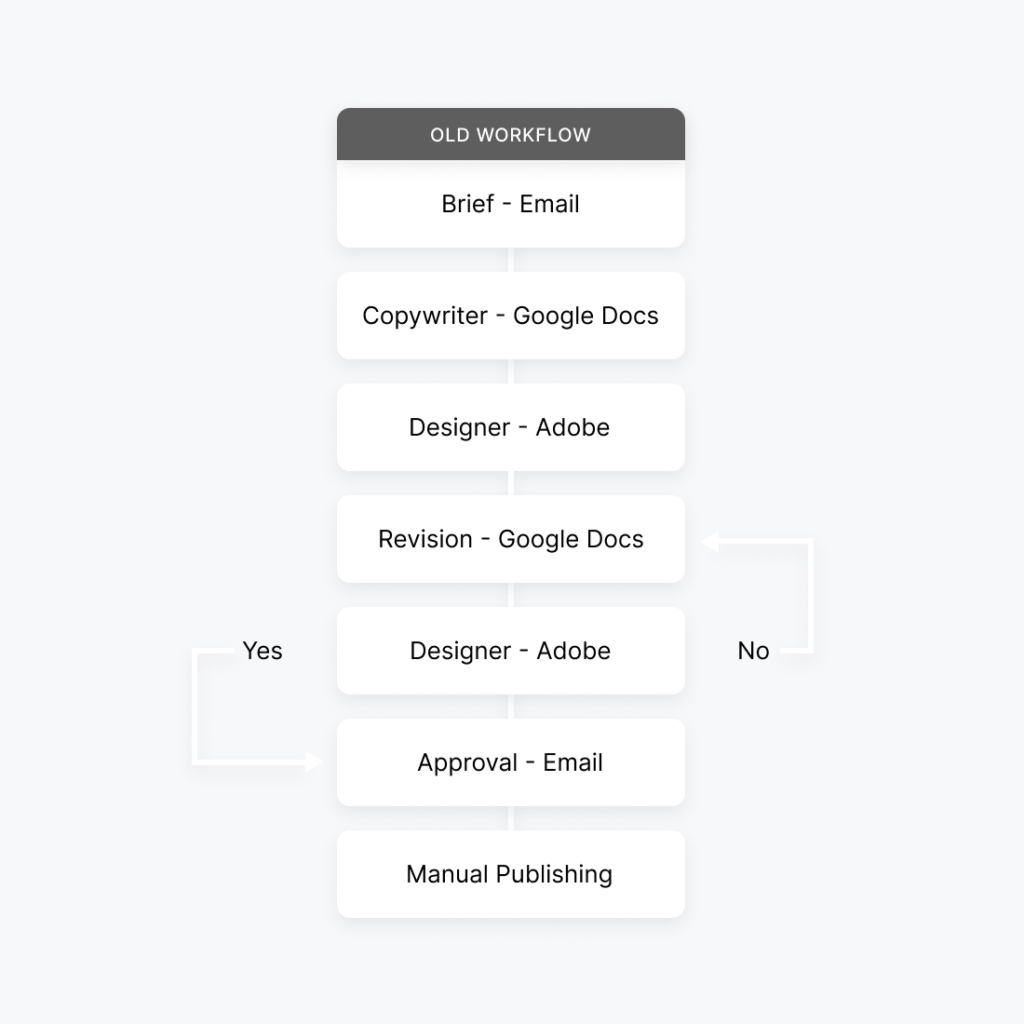
Marketing teams often spend 4–8 hours producing a single blog post or campaign asset due to manual briefing, writing, revisions, image sourcing, and approvals.
Slow production cycles
Too many manual handoffs
Delays launching campaigns
Inconsistent tone/brand voice
The Biggest Pain Points
Marketing teams often spend 4–8 hours producing a single blog post or campaign asset due to manual briefing, writing, revisions, image sourcing, and approvals.
THE USER
The User Personas
Designed for busy Marketing Managers, Content Writers, and Startup Founders who need to produce high-quality content faster with fewer bottlenecks.
MY ROLE
Project Manager
I acted as the Product Manager for this concept project, identifying user pain points, designing the workflow, selecting tools, defining metrics, planning rollout, identifying risks and strategy.
MY ROLE
Project Manager
I acted as the Product Manager for this concept project, identifying user pain points, designing the workflow, selecting tools, defining metrics, planning rollout, identifying risks and strategy.
BUSINESS GOAL
Reduce time to publish
content by 50%
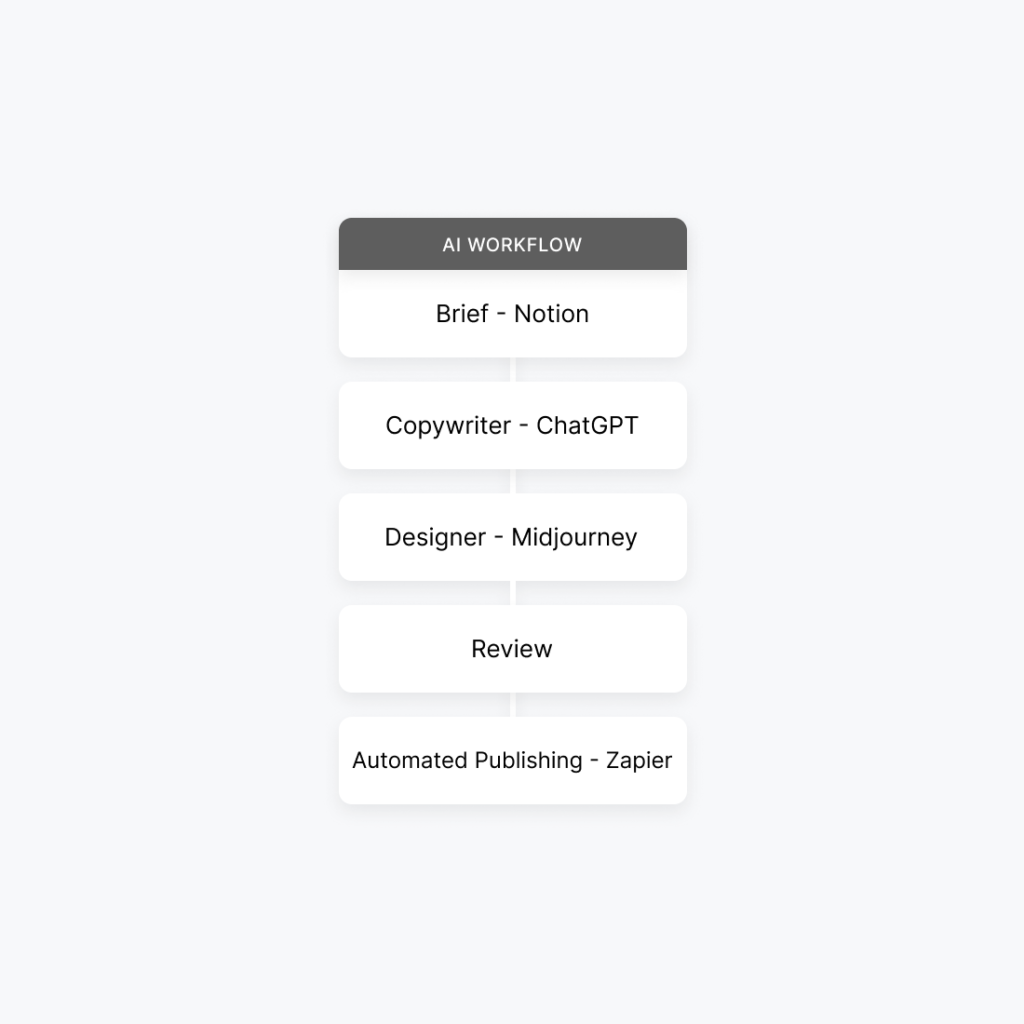
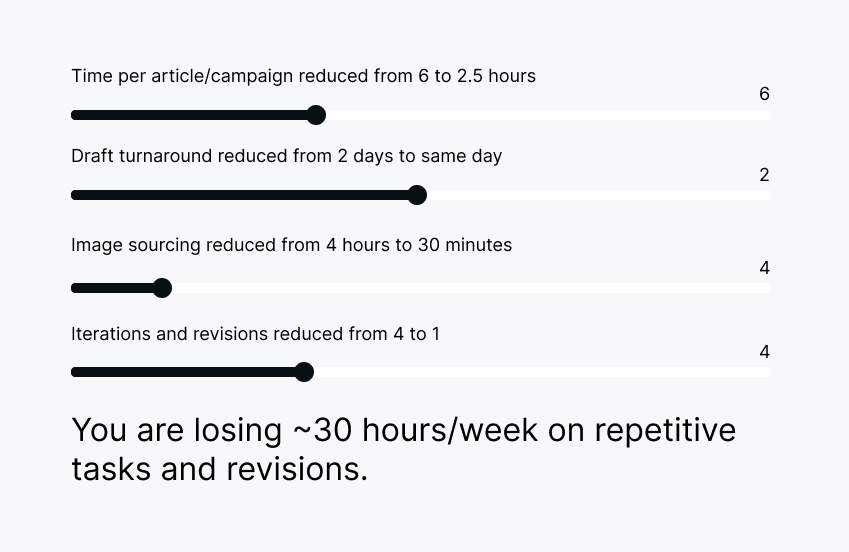
The goal was to increase the content production efficiency by 50% while maintaining quality, consistency, and approval accuracy across the workflow.
THE SOLUTION
The Solution
Reduce time to publish content by 50% while maintaining quality.
SUCCESS METRICS
Check The Numbers
STRATEGY
Planning for Scalable Delivery
RISKS
Introducing AI into the content workflow creates risks around inaccurate outputs, inconsistent brand tone, over-reliance on automation, and quality control gaps as well as hallucinated copy and low quality visuals.
There is also potential resistance from team members adjusting to new tools and processes.
RISK MITIGATION
To reduce risk, all AI-generated content requires human review before publishing, with prompt templates created to maintain brand consistency.
A phased rollout approach is advised to test workflows, gather feedback, and refine outputs before expanding automation across additional content channels.
SCOPE
The initial MVP focuses on the highest impact content tasks only: blog articles drafting, social media posts, image sourcing, headline generation, and approval handoffs.
More advanced features such as marketing campaigns, analytics feedback loops, and multi-channel automation are intentionally excluded from phase one.
LESSONS
What I've Learned
This project reinforced the importance of balancing automation with quality control, and designing AI systems around real user workflows rather than novelty.
Interested in AI Product, Growth or Digital Innovation?